Works with the AI tools you already use
validate learning fit
Validate learning interventions by testing learner-need, motivation, and context fit before starting detailed design.
Secure checkout via Stripe
See it in action
You say
I want to create a course for senior managers on using AI for strategic planning. Stakeholders are pushing for it, but I'm not sure if managers will actually use it or if they have the time.
Your agent does
Judgement: Promising but unproven
Confidence: Moderate Recommendation: Proceed with conditions
The learner-need fit is strong due to stakeholder pressure, but Motivation fit and Context fit are unknown. Senior managers face significant time poverty. Before building, we must test if this is a 'learning problem' or an 'access problem.'
Smallest Next Test: Run a 30-minute 'AI Strategy' working session with 5 managers. Observe if they use their own data or rely on templates. If <3 attend or if they cannot find a workflow hook, pivot to a prompt library instead of a course.
What you get
About this skill
The problem
L&D teams and educators often waste resources building extensive courses before confirming if a learning need actually exists or if the problem is better solved by better tools or incentives. Vague personas and stakeholder opinions frequently lead to low engagement because the design ignores real-world context and learner barriers.
What it does
- Evaluates whether a problem requires a learning intervention or a change in workflow, tools, or management.
- Audits evidence quality by distinguishing between supplied data, external research, and untested assumptions.
- Assesses fit across six dimensions: learner-need, motivation, challenge-and-support, context, objective, and commercial viability.
- Surfaces hidden tensions between learner motivations, organizational goals, and regulatory requirements.
- Prescribes the smallest possible research test or prototype to validate high-risk assumptions before full-scale design.
Why this beats prompting it yourself
Generic prompts often result in "yes-man" outputs that validate your idea without rigor. This skill applies specific frameworks like Self-Determination Theory and Vygotskian mediation to expose inconvenient evidence and prevent the creation of "decorative personas" that hide learner heterogeneity. It forces a critical judgment on whether to proceed, pivot, or stop based on evidence strength rather than stakeholder seniority.
Use cases
- Validating a commercial course idea before investing in content production.
- Diagnosing why an existing corporate training program has low completion rates.
- Synthesizing learner research into a high-fidelity design brief for instructional designers.
- Determining if a performance gap is a knowledge issue or a process friction problem.
Known limitations
Requires specific inputs regarding learner data, organizational context, or performance evidence to move beyond low-confidence provisional analysis.
How to install
Drop the file into your AI Agent. Works with Claude, Cursor, ChatGPT, and 20+ more.
Reviews
No reviews yet
Be one of the first to try it. Every listed skill passes our trust checks below.
Security scanned
Passed our 8-point scan before listing
Fresh listing
Recently published to Agensi
30-day refund
Not a fit? Get your money back
Trust & safety
Security scanned
Verified clean today
- 30-day refund guarantee
- One-time purchase, yours forever
- Secure checkout via Stripe

Also available in a bundle
Frequently Asked Questions
Popular in Business & Operations

Business Strategist
A framework-driven consultant for business diagnosis, market mapping, and pricing strategy.
market-tech-analyst
Evaluate market opportunities with technical decomposition, directional sizing, and measurable next-move recommendations.
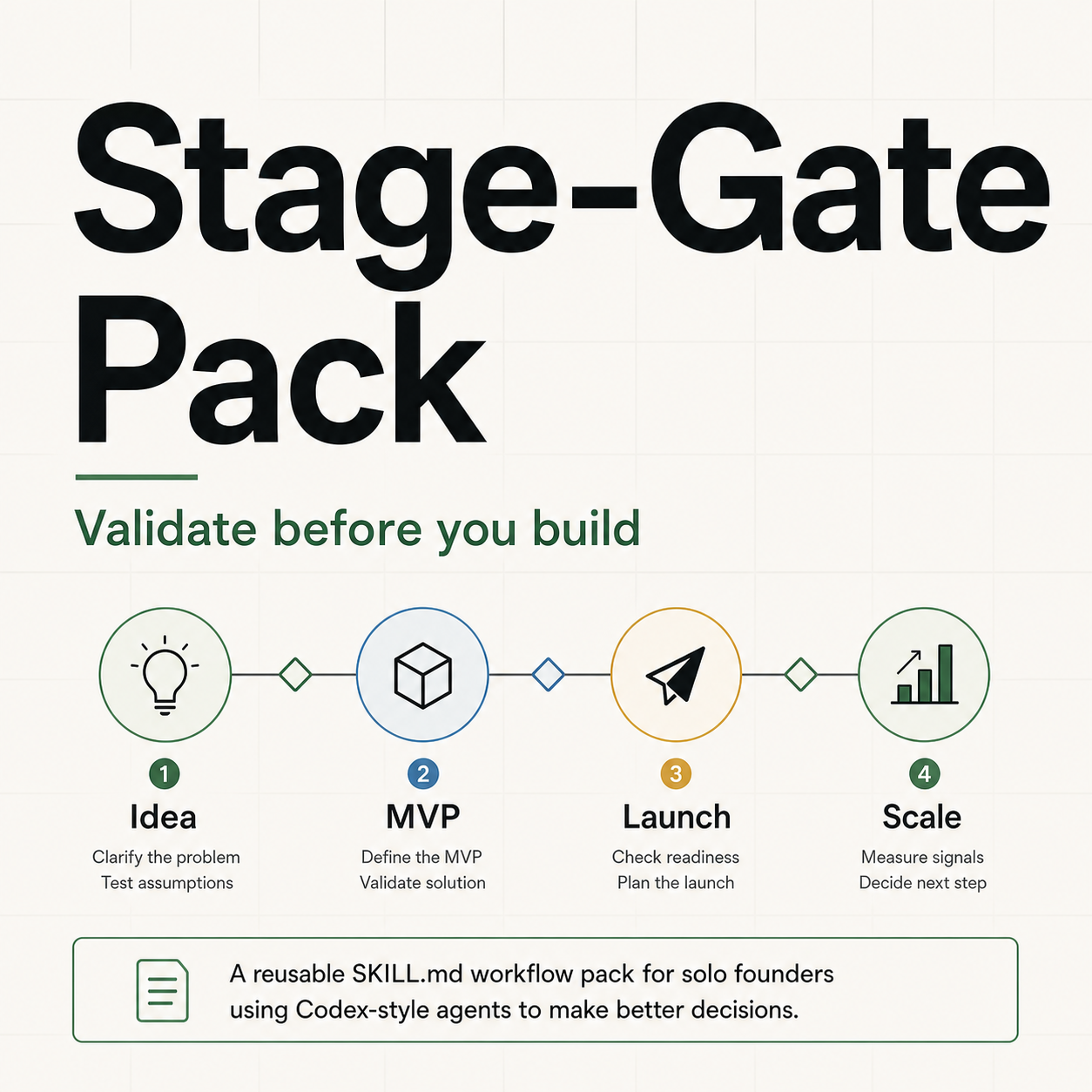
founder-stage-gate-operator
A rigorous stage-gate framework to validate ideas, limit MVP scope, and ensure audit-ready startup growth.
AI Business Solutions Tool - Rostrup
Professional-grade AI frameworks for digital strategy, growth optimization, and business transformation.