AI Software Engineering Command Center™
A complete AI-powered toolkit for modern software development — from turning vague coding tasks into production-ready prompts to understanding unfamiliar codebases, mapping feature impact, investigating bugs, reconstructing production failures, and verifying AI-generated code before it moves forward.
Built for developers and engineering teams who want a structured workflow for planning, coding, debugging, impact analysis, and production verification without juggling separate tools for every stage.
Includes 6 specialized skills:
AI Coding Prompt Refinement Pro Advanced Software Developer Toolkit Pro AI Codebase Time-Saver AI Bug Root-Cause Investigator AI Production Failure Reconstructor
Works with every agent that reads SKILL.md — Claude Code, Cursor, Codex CLI, Gemini CLI, GitHub Copilot, Windsurf, OpenClaw, and more.

One payment, lifetime access. 5 skills unlock instantly in your library.
30-day refund guarantee
Instant unlock in your library
Free updates from the creator
What's included
5 skills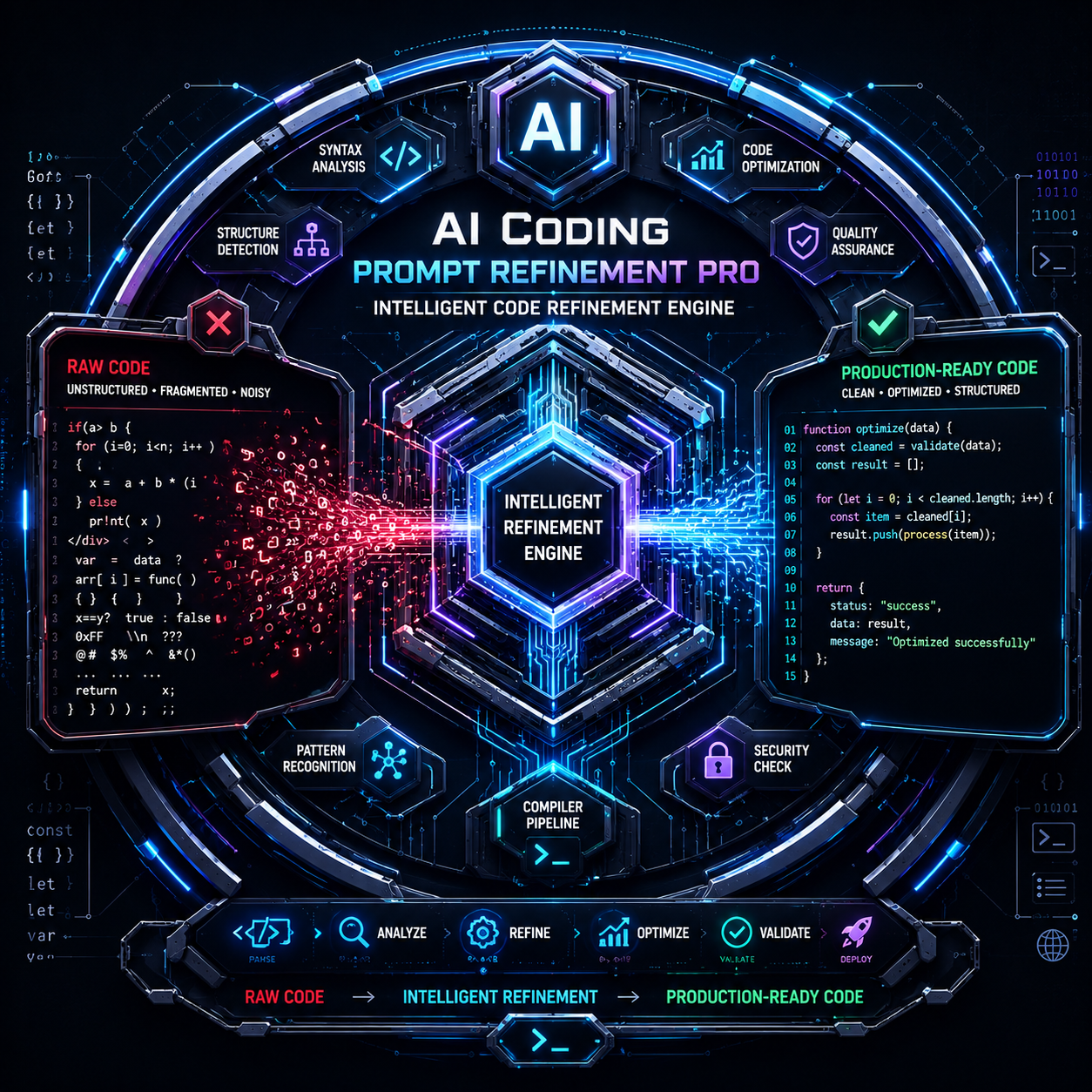
Transform vague coding requests into production-ready AI coding prompts with context, constraints, architecture, tests, acceptance criteria, and verification gates.
Master production-grade coding, system design, debugging, and team collaboration - level up from intermediate to senior developer
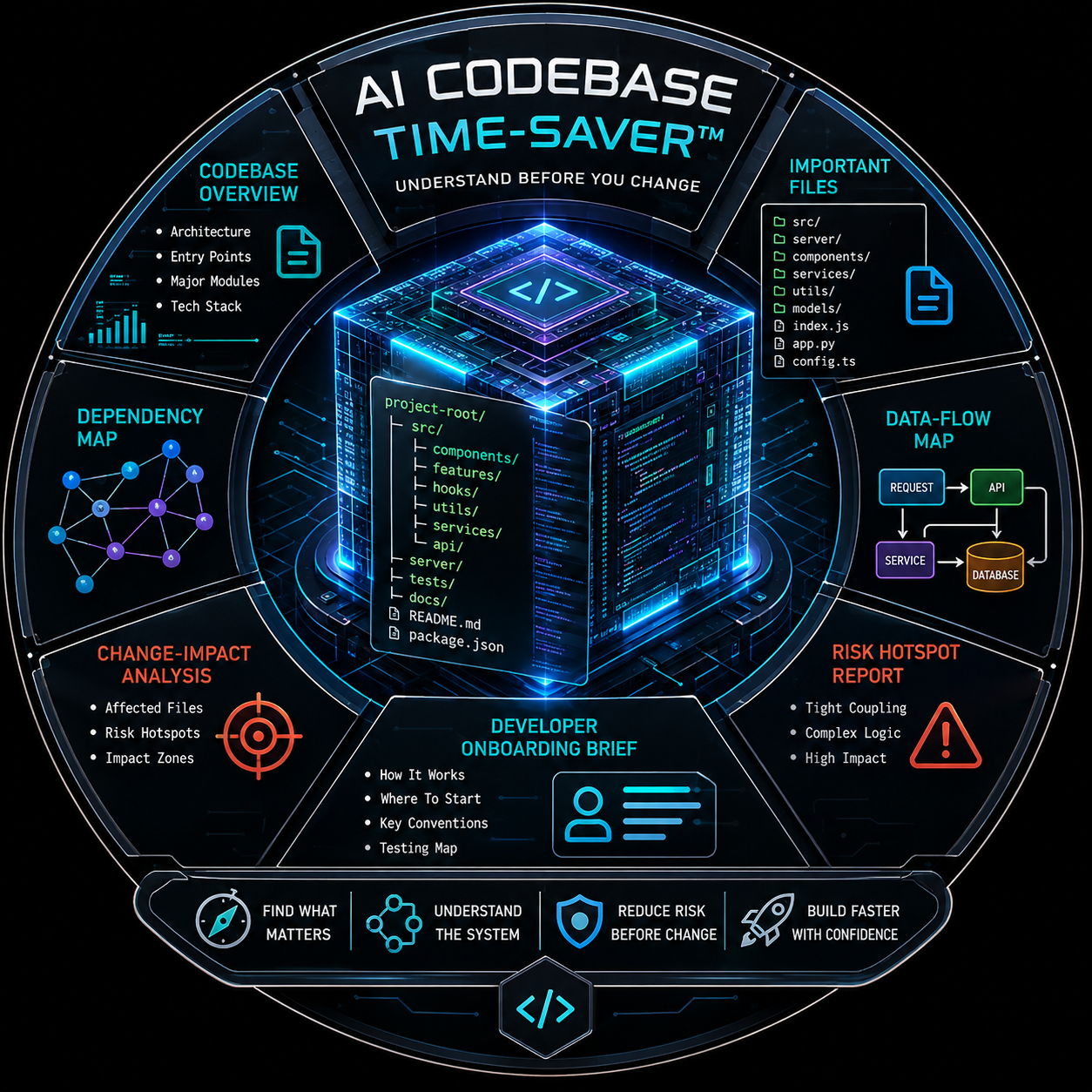
Turn unfamiliar codebases into clear architecture maps, dependency paths, change-impact reports, and developer onboarding briefs.

Trace bugs from symptoms to evidence-backed root causes, affected code paths, fixes, and regression tests.
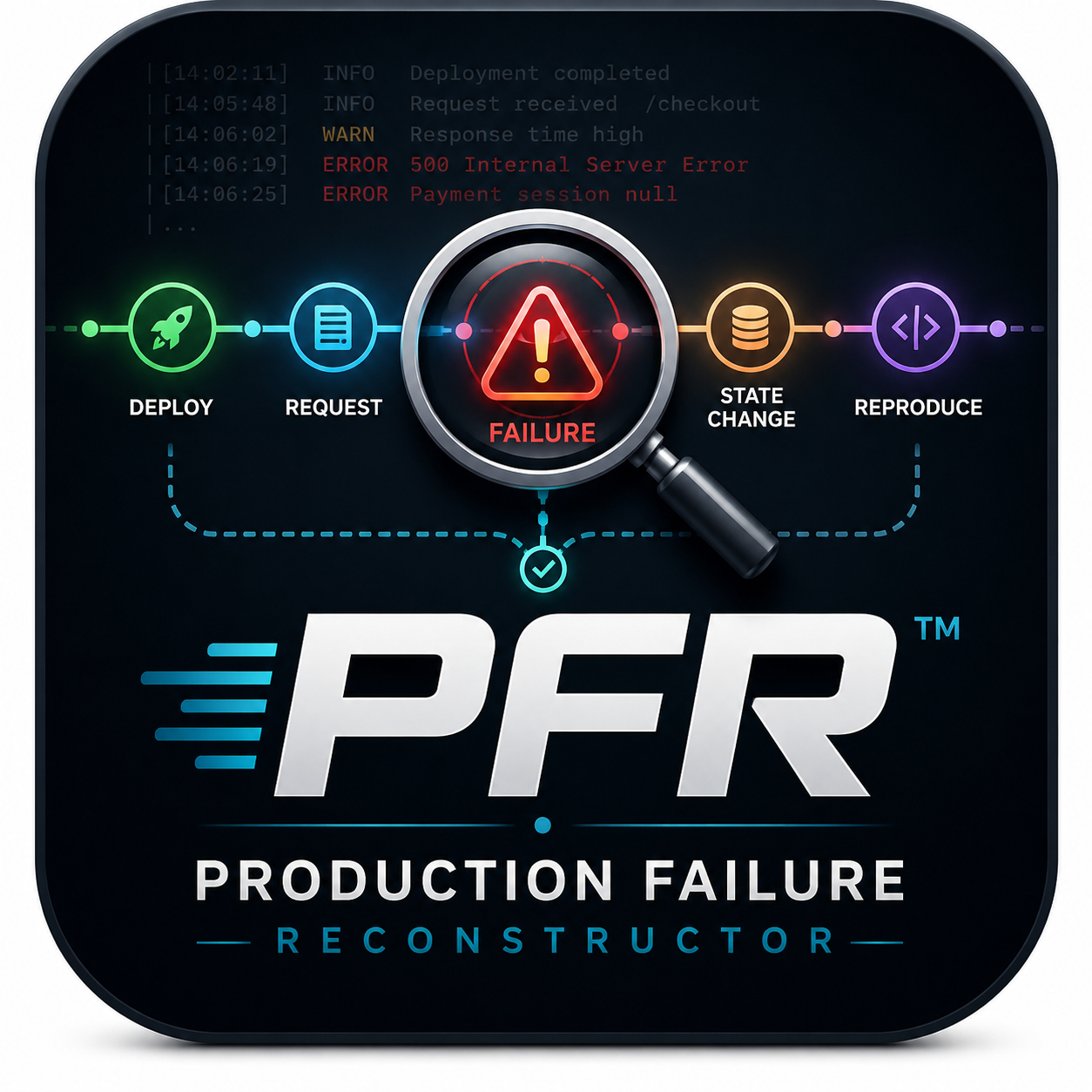
Reconstruct production failures from logs, deploy changes, errors, and timelines to identify what happened, why, and how to reproduce it
See it in action
You say
Add a dark mode to my React app. Make it look professional and don't break anything. Use the existing styling system if possible. Make sure it works on mobile too.
Your agent does
PRODUCTION CODING PROMPT Task
Implement a production-ready dark mode system for the existing React application while preserving current functionality, design-system conventions, and responsive behavior.
- Repository Inspection
Before modifying code:
Identify the React framework and version. Locate the existing styling system. Identify global theme variables/tokens. Identify layout and component styling conventions. Determine whether a theme provider, context, CSS variables, Tailwind configuration, or equivalent system already exists. Inspect existing responsive breakpoints. Identify components that use hard-coded colors and may not automatically adapt.
Do not introduce a new styling framework if an existing system can support the requirement.
- Scope
In scope:
Light/dark theme support Theme state management Theme persistence Theme-aware global colors Existing components adapting to the theme Mobile compatibility Theme toggle UI Accessible theme controls
Out of scope:
Rebuilding the component library Replacing the existing CSS architecture Unrelated visual redesign Changing business logic Rewriting components unnecessarily 3. Implementation Requirements Reuse the existing styling architecture whenever practical. Prefer centralized theme tokens over scattered hard-coded colors. Avoid duplicating component styles unnecessarily. Preserve existing light-mode appearance as closely as possible. Ensure dark mode provides sufficient contrast. Persist the user's theme preference using the project's existing storage conventions. Avoid hydration or flash-of-incorrect-theme issues where applicable. Respect existing responsive behavior. Keep the implementation modular and maintainable. 4. Edge Cases
Handle:
First-time users Returning users with saved preferences System-theme preference if supported Missing theme preference Components containing hard-coded background colors Modal/dropdown states Form controls Disabled states Loading states Error states 5. Accessibility
Verify:
Text contrast Interactive element contrast Focus states Keyboard accessibility Theme toggle labeling Screen-reader accessibility
Do not rely exclusively on color to communicate state.
- Acceptance Criteria
The implementation is complete only when:
Light mode continues to work. Dark mode can be enabled and disabled. Theme preference persists correctly. Existing major components adapt correctly. Mobile layouts remain functional. No unrelated files or functionality are changed. Existing tests continue to pass. Appropriate new tests are added where practical. No obvious contrast/accessibility regressions are introduced. 7. Verification
After implementation:
Run the existing test suite. Run the project's lint/type-check commands when available. Verify both themes across primary screens. Check responsive layouts. Check interactive states. Report any unresolved issues instead of claiming success. 8. Final Response
Return:
Implemented
Files changed Main architectural decisions Tests executed Verification results
Potential Issues
Remaining limitations Any assumptions made Any manual verification still required
Do not claim the task is complete if verification failed.
How to install
Drop the file into your AI Agent. Works with Claude, Cursor, ChatGPT, and 20+ more.
Reviews
No reviews yet
Be one of the first to try it. Every skill in this bundle passes our trust checks.
Security scanned
Passed our 8-point scan before listing
Fresh listing
Recently published to Agensi
30-day refund
Not a fit? Get your money back